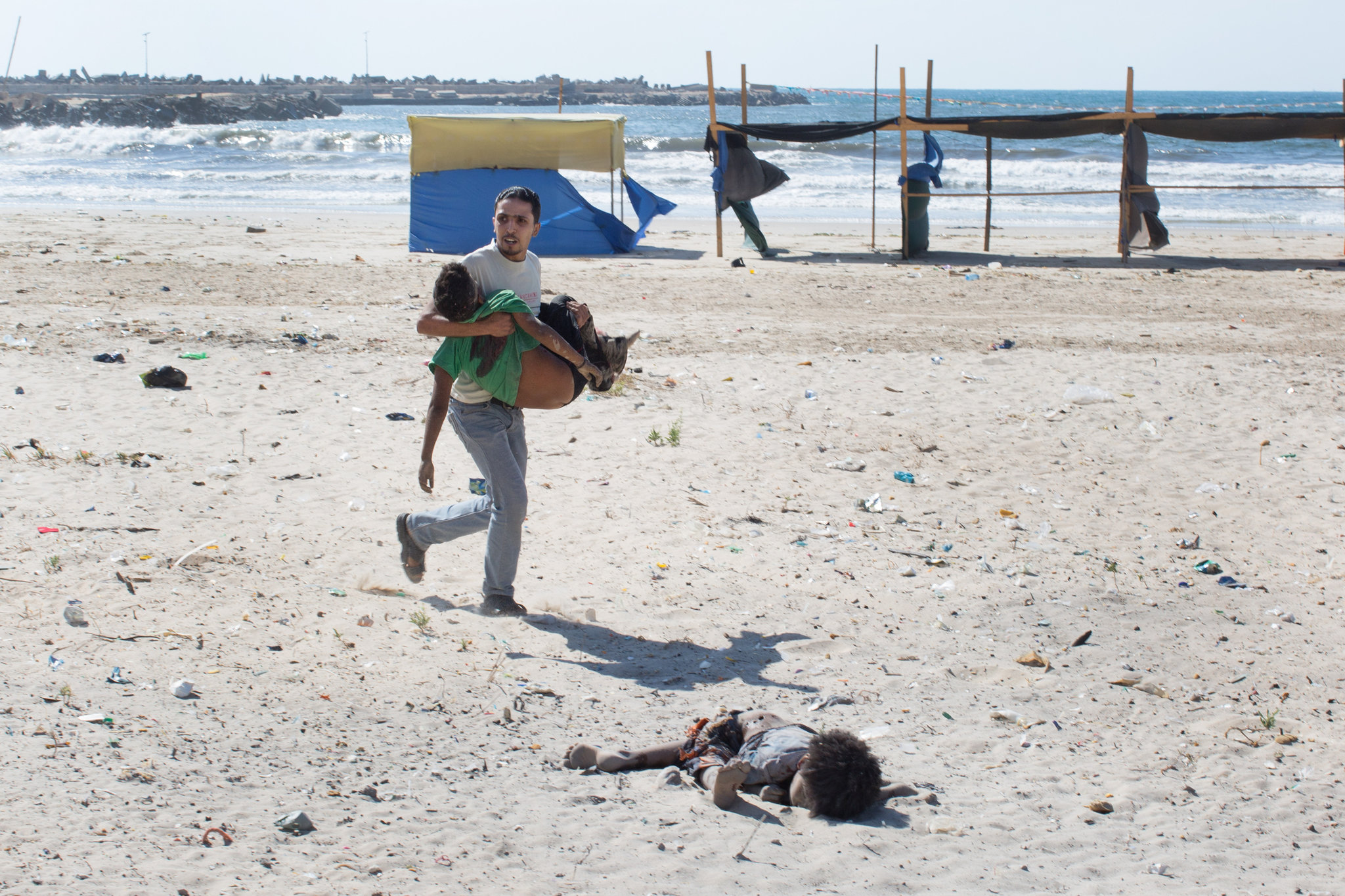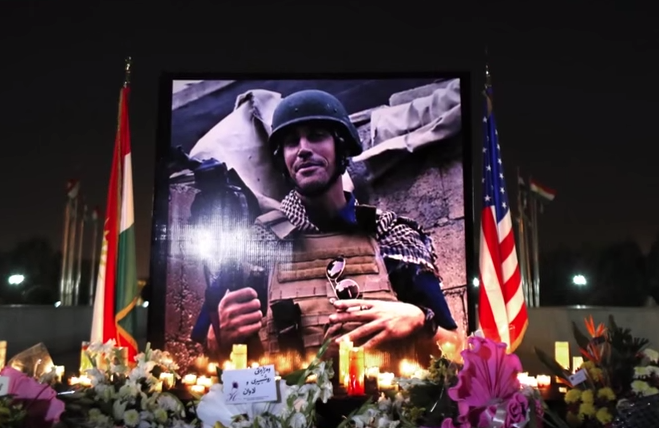
Say ‘Hell No!’ to the hell of Guantanamo

Sign here: http://goo.gl/U4HOm

Sign petition HERE.

Why you ask? Isn’t “Guantanamo” part of Washington’s war on terror? Don’t its prisons keep us safe?

[Insert here your favorite head-shaking, mouth-agape emoticon with befuddled expression.]

The “War on Terror” is terror. Terror today for innocent people targeted by Washington’s blatant violation of due process. Read Jill Lepore’s excellent New Yorker article (below), “The Dark Ages,” to learn more.

So why should you sign the petition (click HERE) to close Guantanamo? For your kids. The abuses in the so-called war on terror are creating terror and terrorists for future generations. Built into the “war” by its brilliant, wealthy military industrialists is perpetual warfare. Pretty smart, huh?

As is, we will never experience peace.

Please sign. It’s a start.

The New Yorker

March 18, 2013

The Dark Ages: Terrorism, counter-terrorism, and the law of torment.

BYLINE: Jill Lepore

SECTION: FACT; A Critic At Large; Pg. 28 Vol. 89 No. 5

On November 13, 2001, George W. Bush, acting as President and Commander-in-Chief, signed a military order concerning the “Detention, Treatment, and Trial of Certain Non-Citizens in the War Against Terrorism.” Under its provisions, suspected terrorists who are not citizens of the United States were to be “detained at an appropriate location designated by the Secretary of Defense.” If brought to trial, they were to be tried and sentenced by a military commission. No member of the commission need be a lawyer. The ordinary rules of military law would not apply. Nor would the laws of war. Nor, in any conventional sense, would the laws of the United States. In the language of the order, “It is not practicable to apply in military commissions under this order the principles of law and the rules of evidence generally recognized in the trial of criminal cases in the United States district courts.”

“You’ve got to be kidding me,” Attorney General John Ashcroft reportedly said when he read an early draft, in which members of the commissions, as well as attorneys for both the prosecution and the defense, were to be selected by the Secretary of Defense. As Jess Bravin, the Wall Street Journal’s Supreme Court correspondent, reports in “The Terror Courts: Rough Justice at Guantánamo Bay,” Ashcroft expected the prosecution of people involved in 9/11 to be handled criminally, by his department, as had been done, successfully, with earlier terrorism cases. Other senior advisers had not been consulted. Condoleezza Rice and Colin Powell learned that Bush had signed the order only when they saw the news reported on television. In the final draft, the Department of Justice was left out altogether. Suspected terrorists could be imprisoned without charge, denied knowledge of the evidence against them, and, if tried, sentenced by courts following no previously established rules.

“Now, some people say, ‘Well, gee, that’s a dramatic departure from traditional jurisprudence in the United States,’ ” Vice-President Dick Cheney said the next day, “but there’s precedent for it.” Furthermore, “We think it guarantees that we’ll have the kind of treatment of these individuals that we believe they deserve.”

This all happened not very long ago, but it can seem like something from another age. Beginning in the fall of 2001, hundreds of men were taken into custody and interrogated, all around the world, but especially in Afghanistan, where the U.S. military dropped flyers offering, in exchange for information about men with ties to Al Qaeda and the Taliban, bounties of millions of dollars. “This is enough money to take care of your family, your village, your tribe for the rest of your life,” one flyer read. Detainees later said that they were sold for between five thousand and twenty-five thousand dollars. (The average annual income in Afghanistan at the time was less than three hundred dollars.) The flyers fell, Defense Secretary Donald Rumsfeld said, “like snowflakes in December in Chicago.”

Lakhdar Boumediene was arrested in Sarajevo. Boumediene, a thirty-five-year-old native Algerian, had once worked at an orphanage in Pakistan run by an organization whose leader had ties to at least one member of Al Qaeda. In 2001, Boumediene was living in Bosnia with his wife and two young daughters, and working as a director of humanitarian aid for the Red Crescent, a Red Cross affiliate. He was charged with plotting to bomb the U.S. and British Embassies. A Bosnian court, finding no evidence of this, dropped all charges and released him. Boumediene was then taken into American custody. Meanwhile, the Bush Administration prepared a document defining the procedures by which the military commissions would operate. In lieu of rights, the term of art was “Procedures accorded to the Accused.”

There remained the question of where to imprison the men. Sending them to Leavenworth and reopening Alcatraz were both considered but were rejected, because holding suspected terrorists on American soil might allow them to appeal to American courts and U.S. law. Diego Garcia, an island in the Indian Ocean, was considered, too, but it is a British territory, and therefore subject to British law. As Jonathan M. Hansen explains in “Guantánamo: An American History,” the U.S. naval base, which occupies forty-five square miles on the southeastern end of Cuba, is an imperial leftover, a Cold War discard, a remnant. As a matter of sovereignty, it isn’t part of Cuba, and it isn’t part of the United States. It’s one of the known world’s last no man’s lands, an island out of time, a place without a state. Haitian refugees held there in the nineteen-nineties, pleading that their forced repatriation would be unlawful, brought their case to the Supreme Court, which ruled, 8-1, that, absent congressional action, people held at Guantánamo had no recourse to U.S. refugee laws. The case influenced John Yoo, the Bush Administration lawyer whose interpretation of American and international law lay behind the Administration’s counterterrorism policy. Guantánamo, one Administration official said, was the “legal equivalent of outer space.”

The selection of Guantánamo as the place to imprison men captured in the “global war on terror” was announced on December 27, 2001. The Administration’s attention then shifted from the prisoners’ detention to their treatment. On January 9, 2002, Yoo and a colleague submitted to the general counsel of the Department of Defense one of the first of what came to be called the “torture memos.” In the January 9th memo, Yoo concluded that international treaties, such as the Geneva Conventions, “do not apply to the Taliban militia,” because, although Afghanistan had been a party to the Geneva Conventions since 1956, it was a “failed state”; moreover, international treaties “do not protect members of the al Qaeda organization, which as a non-State actor cannot be a party to the international agreements governing war.”

Two days later, the first twenty prisoners, shackled, hooded, and blindfolded, arrived at Guantánamo. Their names were not released. They were confined in Camp X-Ray, which you could see right through: its eight-by-eight-foot, concrete-floored cages were made of chain-link fence, and the floodlights were never turned off. More camps were soon built to house more prisoners, eventually seven hundred and seventy-nine, from forty-eight countries. They weren’t called criminals, because criminals have to be charged with a crime. They weren’t called prisoners, because prisoners of war have rights. They were “unlawful combatants,” who were being “detained,” in what the President called “a new kind of war,” although, really, it was very old.

The military order, the location of the prison, and the memos all evaded a variety of legal instruments designed to protect prisoners from torture. But another obstacle remained: the Convention Against Torture and Other Cruel, Inhuman or Degrading Treatment or Punishment, a treaty that the United States had signed in 1988 and ratified in 1994. This objection was addressed in August, 2002, in a fifty-page memo to the White House counsel Alberto Gonzales-signed by the Justice Department’s Jay S. Bybee but reportedly drafted by Yoo-which attempted to elaborate a distinction between acts that are “cruel, inhuman, or degrading” and acts that constitute torture. “Severe pain,” a threshold for torture, was defined as pain like that associated with “death, organ failure, or permanent damage resulting in a loss of significant body function.” (“If the detainee dies, you’re doing it wrong,” Jonathan Fredman, the chief counsel for the C.I.A.’s counterterrorism center, advised, according to meeting minutes later released by the Senate Armed Services Committee.)

Methods described in the torture memos include stripping, exposure to extremes of temperature and light, false threats to family members, and the use of dogs. Lakhdar Boumediene, who arrived in Guantánamo on January 20, 2002, said that, in one sixteen-day period, he was questioned night and day. (“I was kept awake for many days straight,” he later wrote. “I was forced to remain in painful positions for hours at a time. These are things I do not want to write about; I want only to forget.”) In the memos, these techniques have names like “Fear Up Harsh” and “We Know All,” and are daubed with the greasy paint of the bureaucrat. “Sleep Adjustment” is “adjusting the sleeping times of the detainee (e.g., reversing sleep cycles from night to day). This technique is NOT sleep deprivation.” Waterboarding: “the individual is bound securely to an inclined bench, which is approximately four feet by seven feet. The individual’s feet are gently elevated. A cloth is placed over the forehead and eyes. Water is then applied to the cloth in a controlled manner. As this is done, the cloth is lowered until it covers both the nose and mouth.” In this fashion, “water is continuously applied from a height of twelve to twenty-four inches,” so that the individual experiences the sensation of drowning. After a break of three or four breaths, “the procedure may then be repeated.”

Many of these forms of torment, including subjecting prisoners to stress positions, sleep disruption, semi-starvation, and extreme cold, came from a 1957 study, conducted by the Air Force, called “Communist Attempts to Elicit False Confessions from Air Force Prisoners of War.” It was an investigation of interrogation methods used by Chinese Communists, who tortured American prisoners during the Korean War. Bush’s top security advisers, including Rice and Powell, were consulted about what the White House called “enhanced interrogation techniques.” Powell objected to defying the Geneva Conventions. Ashcroft urged discretion. “Why are we talking about this in the White House?” he is said to have asked at one meeting, warning, “History will not judge this kindly.”

The spread of such torture around the world is the subject of “Habeas Corpus After 9/11: Confronting America’s New Global Detention System,” by Jonathan Hafetz, who teaches at Seton Hall, and of “The Guantánamo Effect,” which is based on interviews with sixty-two former detainees, conducted by Laurel E. Fletcher, the director of the International Human Rights Law Clinic, at Berkeley, and Eric Stover, the director of Berkeley’s Human Rights Center. In Afghanistan alone, procedures authorized in the torture memos were used by the C.I.A. at several sites, including a facility in Kabul known as the Dark Prison (where prisoners were not allowed to see the light) and Bagram Air Base, where, in 2002, two men were tortured to death: both died while chained to the ceiling of their cells. Eliza Griswold, writing in The New Republic, quoted a former interrogator who described Bagram as echoing with “medieval sounds.” The medieval dungeon: the scrape of shackles, the screams of agony, the groans of despair.

For a time, Americans interrogating suspected terrorists were not answerable to any rules, except those made, ad hoc, by the Bush Administration. The White House’s answer to terrorism, which is an abandonment of the law of war, was the abandonment of the rule of law.

“There’s precedent for it,” Cheney had said. In fact, the history of the trial is inseparable from the histories of evidence, torture, and punishment. An ancient form of adjudication known as trial by ordeal became commonplace after 500 A.D.; its heyday lasted from 800 to 1200 A.D. In trial by ordeal, a defendant submits to a gruelling physical test, the outcome of which is taken as a sign from God, an indication of guilt or innocence. In the end, man is judged by God alone. Trial by ordeal was practiced throughout Latin Christendom. It was a favorite device for trying traitors, slaves, and foreigners. In medieval English law, the ordeal was an appropriate trial for “the foreigner or friendless man.” It took many forms. A dispute between conflicting testimonies might be resolved by the trial of the cross: two men were ordered to stand with arms raised; he who could hold them up the longest was found to be telling the truth. Trial by fire involved grasping an iron bar. A plea was offered to God: “If this man is innocent of the charge from which he seeks to clear himself, he will take this fiery iron in his hand and appear unharmed; if he is guilty, let your most just power declare that truth in him, so that wickedness may not conquer justice but falsehood always be overcome by the truth.”

The Church’s sanction for trial by ordeal was withdrawn in 1215, by order of the Fourth Lateran Council. The legal historian John H. Langbein has argued that the abolition of trial by ordeal led to a judicial crisis: placing the fate of men in the hands of other men, rather than in the hands of God, proved to be a difficult adjustment. In Continental Europe, trial by ordeal was replaced by judicial torture: torture authorized by the court for the purpose of gathering evidence that could achieve a state of certainty. The jurisprudence of torture, which derived from Roman-canon law, was essentially a law of proof: a defendant could be convicted of a serious crime only if his guilt was “full proof,” which meant either that he had voluntarily confessed or that there were two eyewitnesses to his crime. In cases of “half proof” (for instance, one eyewitness, or two quarter-proof pieces of circumstantial evidence, added together), the defendant would be tortured. Because people who are tortured will confess to anything, many laws required that a confession extracted by torture include details that “no innocent person can know.”

In England, trial by ordeal was replaced not by judicial torture but by trial by jury. Why this happened isn’t quite clear; possibly, it had something to do with limits placed on English monarchs, especially those relating to what’s now called due process. In 1215, the year the Church effectively abolished trial by ordeal, King John signed the Magna Carta, pledging certain liberties to the people, including that “No Freeman shall be taken or imprisoned . . . but by lawful judgment of his Peers, or by the Law of the land.” Also codified in thirteenth-century England was the writ of habeas corpus, an order requiring a jailer to bring a prisoner before a court and explain the cause of his imprisonment. (At first, the writ was chiefly used by the king, to establish his jurisdiction, rather than by prisoners.) The first criminal jury trial took place in Westminster, in 1220. It included elements of ordeal. Swearing an oath was a means of bringing God’s judgment into the proceedings. And there remained the threat of pain. The accused had to consent to trial by jury. The other choice, according to a thirteenth-century treatise, was prisone forte et dure: ”let their penance be this, that they be barefooted, ungirt and bareheaded, in the worst place in the prison, upon the bare ground continually night and day, that they eat only bread made of barley or bran, and that they drink not the day they eat; nor eat the day they drink, nor drink anything but water, and that they be put in irons.” Most people chose trial by jury.

The sixteenth and seventeenth centuries witnessed a revolution in punishment: blood sanctions (maiming and execution) began to be replaced by forms of bondage (galley slavery and indentured servitude) and of confinement (short- and long-term imprisonment). The availability of punishments short of corporal and capital punishment gave courts far more discretion in handling evidence. Defendants for whom evidence was something less than full-proof could be given lighter sentences: shorter terms of bondage or imprisonment. Judicial torture was abandoned. Meanwhile, in England, habeas corpus became a remedy for prisoners seeking relief for arbitrary imprisonment, even in times of war. Five noblemen imprisoned by Charles I for refusing to lend the king money to pay for the Thirty Years’ War sought writs of habeas corpus; they argued that, without charges, “imprisonment shall not continue for a time, but for ever.” The Five Knights case led to the 1628 Petition of Right, which turned habeas corpus from a privilege to a right and then, in 1641, Parliament passed the Habeas Corpus Act, whose power was expanded in 1679 in a piece of legislation that William Blackstone called a “second Magna Carta.”

The law of nations is the rule of law over war. Its most influential theorist, the Dutch jurist Hugo Grotius, wrote “On the Law of War and Peace” (1625), during a time of political and legal ferment that saw the end of judicial torture, the yielding of blood sanctions to bondage and imprisonment, and a revolution in the law of evidence. Holy war was said to have ended with the Middle Ages. In time, the rule of law, revulsion at torture, the abolition of blood sanctions, and the law of evidence became the means by which the nations of the West came to distinguish themselves from the rest of the world (including, not least, non-states like the Taliban insurgency and terrorist organizations like Al Qaeda). Nobody, not even a king, could imprison someone without cause. Torture wasn’t a form of jurisprudence; torture was a species of obscenity. War could not be justified by mere appeal to God, and waged by any means, but must be justified by law, and waged with restraint. War, like crime and punishment, was to be ruled not by God, not by men, but by law.

Or so the story goes. In seventeenth-century New England, English colonists ruled that “lawful Captives taken in just Wars” could be sold into slavery. In practice, this meant that, so long as you called a war you waged just, you could enslave your enemies at the end of it. At the close of King Philip’s War (1675-1676), in which Algonquian Indians had tried to oust the English from New England, governors sent signed certificates on ships that conveyed prisoners of war to islands in the Caribbean, to be sold as slaves, explaining that they had “perpetrated many notorious barbarous and execrable murthers, villanies and outrages . . . without giving any account of their controversys and refusing (according to the manner of civill nations) an open decision of the same.” They had been declared, in effect, unlawful combatants. In 1741, when New Yorkers suspected that the city’s slaves were plotting to burn the city down, and murder all the free men (at the time, one in five New Yorkers was enslaved), more than a hundred men in the city were arrested and thrown into a dungeon in the basement of City Hall, where they were interrogated, for months. Under duress, most confessed; those who didn’t were brought to trial. Nearly all the evidence against the accused came from statements extracted from other slaves, which were admissible in court only because a long-standing ban against “Negro Evidence” had been lifted, to cover just such cases of slave conspiracy. Seventeen men were found guilty, and hanged; thirteen were burned at the stake. Most of the rest were shipped to the Caribbean, to islands known, at the time, as graveyards.

The laws of war can be debased and made, even, into weapons of war. The rule of law can be made a travesty. Still, sometimes laws are all that stands in the way of imprisonment, torture, trials, and executions conducted at the king’s pleasure.

In 2001, when the Bush Administration talked about precedent for the military commissions, it meant the Second World War. Yoo, in his memos, cited a case involving a military order signed by F.D.R. in 1942, providing for the establishment of a military commission to try eight Nazi saboteurs who had entered the United States; the order’s constitutionality was upheld in a Supreme Court case known as Ex Parte Quirin. Felix Frankfurter called Quirin “not a happy precedent.” The reason for the 1942 military tribunal appears to have been that the F.B.I. bungled the prosecution of the sabotage: a military commission was meant to provide the agency with cover. In any case, a number of features distinguish Roosevelt’s military order from Bush’s. F.D.R.’s was backed by legislative authority, during a declared war, and the prisoners were held and the trial conducted in the United States. None of these conditions applied to the Bush order. And, as Neal Kaytal and Laurence Tribe argued in the Yale Law Journal in 2002, the Bush order “makes the jurisdictional question (whether someone is subject to a military trial at all) the very same one as the question on the merits (whether the person is guilty of a war crime).” The Nazi saboteurs were tried immediately, in a single trial. But, as Bravin writes in “The Terror Courts,” “the Bush administration envisioned creating for the first time a permanent legal structure under the president’s sole command.”

Among the strongest protests lodged against the commissions and the use of torture were those from members of the military. Bravin profiles Stuart Couch, a lieutenant colonel in the Marine Corps, who in late 2003 joined the prosecution staff. While preparing cases, Couch grew concerned that most of the evidence in the files he saw was paraphrased from detainees’ statements. Many of the prisoners at Guantánamo seemed to be ordinary men caught in a dragnet that trained fighters-Al Qaeda’s leaders-had been able to escape. “The joke we used to have at commissions is, we’d call them the butcher, the baker, and the candlestick maker,” one prosecutor, Air Force Major Rob Preston, said. Couch and others worried that men who were guilty and dangerous either had got away or couldn’t be convicted, because the evidence against them was limited to confessions and accusations extracted during brutal interrogations. Then there was the matter of the commissions. Military prosecutors began formally stating their objections. “I sincerely believe that this process is wrongly managed, wrongly focused and a blight on the reputation of the armed forces,” Preston wrote in an e-mail, in 2004, the year the first military commission met. Couch refused to participate in the prosecution of cases in which, he believed, the evidence had been obtained through torture. “As an ethical matter, I opine that the interrogation techniques utilized with this detainee are discoverable by defense counsel, as they relate to the credibility of any statements given by him,” Couch wrote to his superior. “As discoverable material, I have an ethical duty to disclose such material to the defense.”

Meanwhile, reporters, lawyers, and human-rights activists had been investigating the conditions under which the prisoners were being held. “The Guantánamo Lawyers: Inside a Prison, Outside the Law,” edited by Mark P. Denbeaux and Jonathan Hafetz, is an anthology of reminiscences by more than a hundred lawyers who defended the detainees. “I would have confessed to anything to get my leg back,” a prisoner named Abdul Aziz Naji told his attorney, Ellen Lubell, “but I didn’t know what they wanted me to say.” Naji lost his leg to a land mine, and his prosthetic was broken by U.S. soldiers at Bagram. At Guantánamo, he was given a replacement that didn’t fit; he pulled his stump out of it, to show Lubell, leaving the prosthetic, outfitted with a white sneaker, still shackled to the floor. “I knew I had come to the heart of a new kind of irony,” Lubell writes.

Stories began to emerge about the abuse of prisoners. Photographs from Abu Ghraib were broadcast on “60 Minutes II” on April 28, 2004, eight days after oral arguments were heard in the Supreme Court in Rasul v. Bush, a case concerning the jurisdiction of the federal courts over the habeas claims of fourteen Guantánamo prisoners. Opposition grew, especially after the Bush Administration memos were published in “The Torture Papers,” edited by Karen J. Greenberg and Joshua L. Dratel, and the chilling story behind them was reported by Jane Mayer in her book “The Dark Side.” Doubts were raised about whether many of the men sent to Guantánamo should have been arrested at all. In 2006, a team from Seton Hall School of Law released a study of the five hundred and seventeen prisoners then remaining at Guantánamo; according to Department of Defense data, only five per cent of these men had been captured by U.S. troops; at least forty-seven per cent had been arrested by Pakistani or Northern Alliance forces during the months when the U.S. government was offering bounties.

“The military commissions were a crude parody of a justice system,” Muneer Ahmad, a defense attorney, wrote. “The rules changed constantly.” In June, 2006, in Hamdan v. Rumsfeld, the Supreme Court ruled that, without congressional authorization, the President lacked the power to establish the military commissions, which violated both the Geneva Conventions and the Uniform Code of Military Justice. Three months later, Congress reauthorized the commissions under the Military Commissions Act of 2006. A habeas petition filed on behalf of Lakhdar Boumediene was rejected by a lower court, a district court, and an appeals court. In 2006, Boumediene began a hunger strike. (By now, prisoners had begun trying to kill themselves. In 2006, three deaths were declared suicides.) Like other hunger strikers, Boumediene was force-fed through the nose, twice daily. His appeal, Boumediene v. Bush, was decided by the Supreme Court in 2008. A 5-4 majority struck down part of the 2006 Military Commissions Act, and ruled that all prisoners confined at Guantánamo had a right to habeas recourse through the U.S. courts.

In 2009, two days after Barack Obama’s Inauguration, the President released a directive ordering the closing of Guantánamo and issued executive orders banning torture and mandating adherence to the Geneva Conventions. On May 15th, Lakhdar Boumediene, who had been imprisoned for seven and a half years, was released, and flown to Paris, where he went out for pizza with his wife and two daughters, and cried.

On January 28, 2013, a week after Obama began his second term, the State Department shut down the office of Daniel Fried, whose job had been to close Guantánamo. A hundred and sixty-six men remain imprisoned at Guantánamo, and, until their release into the hands of Afghan authorities during the past year-the last slated for transfer just this month-many more were held, some for years, at Bagram. Meanwhile, the New York Times has reported that the Obama Administration holds “Terror Tuesdays,” meetings in which the President and his national-security advisers discuss which suspected terrorists, remaining at large, should be assassinated by drones. In about a third of these cases, the President alone takes responsibility for naming the targets, which have included American citizens.

In February, NBC News released a confidential, undated Justice Department memo, titled “Lawfulness of a Lethal Operation Directed Against a U.S. Citizen Who Is a Senior Operational Leader of Al Qa’ida or an Associated Force.” It explains, in sixteen pages, how it is that the President of the United States has the power to order not imprisonment without charge but the killing of men without anyone bringing evidence before any judicial body, not even an unconstitutional military commission.

There were no unmanned aerial vehicles in the Middle Ages; a drone was a honeybee. But there were assassins. “Assassin” is, in fact, a medievalism; the word gained currency during the Crusades; it derives from “hashish.” It meant a Muslim sent on a mission to kill.

The past is often figured as dark, a prison, a tomb; the future, bright, blue sky, a spaceship. This is an inheritance of the Enlightenment, with its faith in progress and reason and law. Part of the terror of September 11th was the gleaming skyscraper become a tomb, the seeming backward march of time, the horror of the unreasonable. What, then, of the assassin become an unmanned flying machine?

Avery’s Run to Freedom (or Our White Noise of Modern-day Warfare)

NOTE: Avery Bargar, age 23, delivered the scripture reading before I spoke on Sunday, March 10th at First Baptist Church in Newton (MA), eight miles southwest of the Boston Marathon finish line. Five weeks later he was near that finish line at about 2:50 p.m. when he felt two explosions. He sent me this essay. The insight he shares about the “techno-media echo chamber” is especially valuable. Please read to the finish. And please circulate. 

Guest Blogger Avery Bargar

Maybe World War III wasn’t nuclear; maybe it came and went, and Americans watched it on TV. The Long War could be World War IV, better hidden, though not for much longer, in the internet age. Rather than World Wars becoming increasingly obvious in their destruction, perhaps they’ve become more psychological, because they’re tied to our entertainment. We did not get a new World War, instead we got The Real World: War.

By Avery Bargar

BOSTON— On the morning of the 117th Boston Marathon, I opened the Lindt Chocolate Store in the Lenox Hotel in Copley Square, right at the intersection of Boylston and Exeter Street. There were thousands of people lining both sides of Boylston as I squeezed my way through the crowd to work. In the store, our view of the race could hardly have been better — we were a hundred yards or so from the finish line — so as the front runners of the women’s and men’s races took the title, we watched. My coworker and I both marveled at the feat of will, determination, and faith that it must take to make it to the front of the Boston Marathon.

I left work at 2:40 to jam with someone at Boston Conservatory. Outside of the store, I found myself instantly amidst an enormous crowd. I had to walk slowly away from the finish line, bumping my backpack filled with sheet music into everybody on either side of me. I laughed a bit at the pomp of this whole event—thousands of people; cameras and corporate advertising everywhere—New Balance having cleverly co-opted the themes of social upheaval of the last two years into several historical, Boston-related slogans, including “Run to Freedom”—and in the middle of it all, runners streaming by, pumping their fists in the air. Ten minutes later I had barely made it a few hundred feet from Lindt when I heard a massive BOOM.

Instantly the tone of the crowd changed. Cheering stopped. I turned to face the street, confused, noticing bewilderment and disorientation on a thousand faces. I saw a large plume of white smoke rising a couple hundred feet down the street. As soon as this registered, there was another explosion, and people began to scream. The shock tore us away as fast as possible. Let me make this clear— I was not one of the extremely brave people who ran into the heart of the attack to help the wounded. I was a couple hundred yards from the explosions, amid an enormous terrified throng. We ran south, fast. I alerted other pedestrians and drivers along the way, lent out my cell phone, donated blood an hour later, and I tried to call my coworkers, but I did not double back into the heart of the carnage to help. I did not notice that as a possibility, and I am in awe of those who did. There was intense confusion from the start; the immediate experience of it was obscured by this odd emerging technological phenomenon that is both a web and a barrier; connecting yet dividing us.

A week later, this is one of the hardest things for me to unpack about my experience of these attacks— the use of what I’ll call the “post-9/11 techno-media echo chamber” as a political medium. We carry it with us everywhere, even if we don’t have a smartphone.
As I ran away from Boylston Street with thousands of other frightened Bostonians and tourists, I noticed the waves of communication unfold. The first was with the emerging reality— we all witnessed two violent explosions.

“Get away, fast. There could be more.”

The second wave was with the other people in the area.

“Are you ok? Let’s go, keep running.”

I saw a mother and two boys weeping in fear. I lent my phone to a woman much closer to the blasts than I was— right at the finish line when they went off. She was traumatized from what she had seen, which has already been repeated in what will probably be weeks of reports. Which brings me to the third wave, brought through digital devices— calls and texts with family and friends. I tried to call my coworkers to see that they got out.

And in the fourth wave, we distanced ourselves just a bit from the immediate moment, those around us, and our friends and family, and focused on information. We wanted the facts. As we wandered away from the blasts, the sounds of police and ambulance sirens screaming through Back Bay, we became the second hand consumers of our own experience. We turned to our electronic media to help us interpret our confusion and terror, and joined the intended audience of these attacks. Because the key to the post-9/11 techno-media echo chamber is this: the attacked and the witnesses are not the intended audience; we were simply players, acting out the role thrust on us. The real audience is you, out there, watching on your now unavoidable screen— which has followed you from your local cinema into your living room, then into your businesses and restaurants, your lap, and now your pocket.

But how did this echo chamber come to be?

I walked through Boston and into Cambridge, then took a cab to Medford. Stopping at a pizza shop, I saw coverage on the TV of what I’d just seen firsthand three hours earlier. One thing nearly as traumatic as escaping bombs is having them follow you on screens for hours. Here I was in Medford, tired, shaken, hungry, confronted with four new angles of the blasts I’d just run from.

“And look, there’s a scared crowd running for their lives; how awful!”

Within a matter of hours, I’d gone from running for my life to watching my performance on screen, playing a young man running for his life from the danger and bewilderment of a Postmodern Nightmare. Except it’s a nightmare within a nightmare, because the techno-media echo chamber follows us everywhere we go. And this brings me back to that first point— the use of the post-9/11 techno-media echo chamber as a political tactic. Indulge the digression, please. It is relevant.

The assumption I learned in high school history was that World War II was the last World War due to the threat of mutually assured nuclear destruction. World War III could only be nuclear, and since there has been no nuclear war, we’re not there yet. YET! Which is why we took out Saddam! And bin Laden! And Gaddafi! And are looking out for Ahmadinejad! And Kim Jong-Un!

But what about the “Cold War?” Where was it cold? The US, USSR, UK and Western Europe, all sites of World War II. Where was it hot? South America, South East Asia, Central Asia, North Africa, and the Middle East, ending with the disintegration of the USSR, and resulting in regime changes the world over. The difference here is that the media learned to bring the spectacle from American cinemas on news reels into American living rooms on TVs, with spin. A hot war in a cool package. Could this be a candidate for the title of World War III?

But what about the “War on Terror,” or the “Long War?” This one has been pretty well hidden, and yet, “terrorist attacks” and American invasions and interventions made the evening news, the papers, and online news sites; there’s leaked video on Youtube and Vimeo— Twitter, Facebook, and the blogospohere offer platforms for sharing information and perspectives unavailable from the mainstream media. The justifications for this war crumbled under international scrutiny years ago, and yet the drones fly forward, largely un-examined by the mainstream. Could this be another candidate for the title?

Maybe World War III wasn’t nuclear; maybe it came and went, and Americans watched it on TV. The Long War could be World War IV, better hidden, though not for much longer, in the internet age. Rather than World Wars becoming increasingly obvious in their destruction, perhaps they’ve become more psychological, because they’re tied to our entertainment. We did not get a new World War, instead we got The Real World: War.


The normalization of violence through movies, video games, TV, and the news is part of this war, and the techno-media echo chamber, which evolved again on 9/11, has been essential to this process. And further, since five years ago, we carry it with us everywhere! At all times we can access a wealth of perspectives and contacts, yes, but the echo chamber has one main message: DANGER, AROUND THE CORNER— Stay Tuned! From the very format of the Hot Leading Story — “Now to you Tom, at the scene of the blast”— the media feed us the same formats again and again. Tragedy is our New York Times Bestseller, America’s Greatest National Export. And the antidote? “Security.”

In other words, the techno-media echo chamber co-evolved with a culture of international violence, and in shaping our perception of that violence it became a political medium. But it is a battleground only because it insists on being simplistic. It refuses to ask hard questions. And since World War II it has so succeeded in branding and re-branding war, and has amplified itself so absurdly, that we now carry it in our pockets. As a friend told me, “It’s like there’s a town crier at every corner.”

People have learned how to use it against us, and this has only gotten worse since 9/11. It is a crucial tool in modern warfare— whose home front is not a nuclear battle ground or worse, if possible; it is simply a battle against consciousness, against possibility.

As I ran away from this attack, I was in shock, jolted totally awake, and in that state, I was not surprised, to be honest. This is what happens when we live in ignorance. The victims are not at fault. “At fault” is not the right term. “Collateral damage” is closer. I don’t know why this happened, but my main point is that civic dialogue, a practice of open discussion and patient engagement, has gradually been lobotomized. The spaces where it happens are few and far between, increasingly de-funded, or expensive. The intended audience of these attacks is all of us caught in the din of this post-9/11 techno-media echo chamber.

I bring up the “Cold War” and the “War on Terror” and “Terrorists” because they are misleading labels, propagated via the echo chamber, that reduce a few perspectives into “facts” to be memorized and regurgitated,and  then sold in textbooks and on TV, erasing other more nuanced interpretations, and concealing violence.

“Cowards ruined a great event.”

“A tragedy in Boston’s fine history.”

“Increased security will of course be necessary.”

We have to step back and ask the question: WHY IS THIS HAPPENING? We have to ask! “Random, senseless violence” is insufficient.

Further, I’d like to know more about all of this military equipment local and state police forces have rolled out. How much did it cost? Where else could that money have gone? Now that a precedent has been set to use hundreds, if not thousands of high-tech weapons to catch one man, what limits will be put in place for future use?

We have been unconscious as this behemoth has grown.. It has lured us into its den. It spins half-truths and lies, and coins terms that force their way into our language, cannibalizing many more specific terms. It demands that we watch.

My sympathies to the victims and their families. I won’t be forgetting what I saw and heard at the Marathon, and how totally it fit with the logic of Postmodern America.

As bombs fell, Iraqi Good Samaritans rescued American Christians


At the rebuilt Rutba General Hospital in January, 2010. Back row, left to right, nurse Tarik Ali Marzouq and physician’s assistant Jassim Muhammad Jamil, Rutba local, Muslim Peacemaker Teams founder Sami Rasouli, and the rest are Rutba locals. Front row, kneeling left to right, Rev. Weldon Nisly, Cliff Kindy, and Shane Claiborne.  

The synopsis below was published by The Albany Times-Union in advance of an event where I’m speaking on Saturday, March 16. The event, hosted by the Capital Region Theological Center, is titled, “Finding Your Calcutta: Where Does God Call You.” You can register and/or read more about it HERE.


On a sunny Saturday 10 years ago this month three Christian peacemakers from the United States were injured in a car accident that ended violently in a remote desert ditch of war-torn Iraq. It was March 29, 2003, nine days into the Pentagon’s “Shock and Awe” campaign. The U.S. Air Force was dropping on average 941 bombs per day on a sovereign Islamic nation, according to data I gleaned from an April 30, 2003, military report titled, “Operation Iraqi Freedom: By the Numbers.” Those numbers don’t even include ordnance fired by ground troops or allied air forces.

The Christian peacemakers squeezed into a taxi that morning had chosen to reside in this bombardment with the war’s most obvious victims— everyday Iraqis caught in the cross fire between a dictator and history’s most powerful military. Some labeled the peacemakers “human shields.” Others wrote them off as suicidal. They were neither. Simply, their profound spirituality would not allow them to sit idly while their government killed innocent people. In the purest (read: apolitical) sense of the word, they were diplomats. For Christ.

Before going to Baghdad in March 2003, Philadelphia peacemaker Shane Claiborne had explained his motivation in a letter penned like a last testament. In part, he wrote:

“I am going to Iraq to stop terrorism. There are Muslim and Christian extremists who kill in the name of their gods. Their leaders are millionaires who live in comfort while their citizens die neglected in the streets. I believe in another kingdom that belongs to the poor and to the peacemakers. I believe in a safe world, and I know this world will never be safe as long as the masses live in poverty so that a handful of people can live as they wish. … May we stand by those who face the impending wrath of empire and whisper, ‘God loves you, I love you, and if my country bombs your country, I will be right here with you.’”

Weeks later, the Americans found themselves stranded and bloodied in a highway ditch. Indiana organic farmer Cliff Kindy’s scalp was split open and gushing blood. Mennonite minister Weldon Nisly from Seattle had a fractured sternum, shoulder, ribs and thumb. Claiborne, with a separated shoulder, was the least injured. But he felt sick with dread. In the Pentagon’s War on Terror, he feared that Iraqis would see the Americans as the terrorists.

When three Iraqi men in the first vehicle that came to the scene helped the Americans into their truck, Claiborne couldn’t decide if he was being rescued or kidnapped.

A half-dozen miles southeast of that hard ditch, 270 miles west of Baghdad, is a desert town named Rutba. It was the westernmost outpost for Saddam’s Ba’athist regime. Three days earlier, on March 26, 2003, a Special Forces unit from Fort Campbell, Ky., had bombed a suspected ammo depot adjacent to the region’s only hospital. Rutba General Hospital had burned to the ground. So the Americans were taken to a squat building with no electricity and no running water. It’s where Rutba General Director Dr. Farouq Al-Dulaimi, physician assistant Jassim Muhammad Jamil and nurse Tarik Ali Marzouq were treating Rutba’s sick and wounded, and where they would patch up the Americans.

Hearing that the Americans were similar to the Rutba townspeople —peaceful and unarmed — Dr. Farouq told Claiborne, “You are safe in Rutba. We will take care of you. We take care of everyone — Christian, Muslim, Iraqi, American. We are all human beings. We are all sisters and brothers.”

Seven years later, when the peacemakers returned to Rutba to find the Good Samaritans and medical staff who had saved them, Jassim told them that when he heard they had returned, he thought they had left something and wanted to reclaim it.

“I never thought that you came back to say thank you,” he said. “Is it possible that you came back for a simple service [we] provided?”

He later remarked at how the American Christians were behaving like good Muslims, only without the daily prayers.

When the peacemakers left Rutba and the reunion in 2010, they promised to keep telling the story of Rutba’s Good Samaritans. Hearing this, Tarik and Jassim offered to also do their part to bring peace and reconciliation.

“As you do when you go back and you tell your people about Rutba,” Tarik said, “we also are committed to tell our people about your visit and your noble mission.”

Greg Barrett traveled to Iraq in 2003 as a correspondent for Gannett News Service and is the author of “The Gospel of Rutba: War, Peace, and the Good Samaritan Story in Iraq.” He is speaking Saturday, March 16, at the Capital Region Theological Center’s event, “Finding Your Calcutta” at Lisha’s Kill Reformed Church, 2131 Central Ave., Schenectady. For more information go to http://www.capitalrtc.org.

Voice of America Interview Part I

The tenth anniversary to a war we all want to forget is fast approaching. Let’s not forget it. History forgotten becomes history repeated (read: Iran). Let’s examine and then reexamine our mistakes, blunders and bone-headed thinking and learn from our errors.

Now repeat after me:

Peace (English). Salaam (Arabic). Shalom (Hebrew). Hasîtî (Kurdish). (Hawaiian). Santipap (Thai). La Paz (Spanish). Rangima’arie (Maori). (Korean). Ashtee (Farsi). Pingan (Chinese). Eace-Pay (Pig Latin).

Below is the first part of my two-part interview with Voice of America.

Voice of America interview Part I from Greg Barrett on Vimeo.

Week 1 of Resolving to ‘Post-it’ for 365 Days

From my Huffington Post column/blog

As a renovator the 3-x-3 Post-it note can restore a home better than paint and new siding. It can repair more things than duct tape. As a daily supplement — given (not taken) daily like a multivitamin — it fosters growth in the relationships of spouses, lovers, parents and their children; it can nourish souls; and, in my case, correct poor vision.

Story goes like this: One day a few years ago I told my wife, “I love you.” Nothing unusual there. During 15 years of marriage (20 now) I’d said those three words to her 5,475 times (365 x 15 minus a dozen or so arguments each year offset by extra sentiments added like sweetener each anniversary, birthday and Valentine’s).

This time, however, my wife’s response was unusual. Maybe we’d been arguing and/or drifting into our separate work and projects. I honestly don’t recall.

“Why?” she responded, hugging me.

“Why what?”

“Why do you love me? Why me?”

Her question wasn’t rhetorical. There were many reasons I loved her, but I couldn’t recall the last time I’d bothered to articulate many or any of them. Put on the spot, I waved her off, used a question to fend off the question.

“Why? What do you mean, ‘Why?’ Why do you love me? That’s the harder question.”

I’m an early riser, always first in the house. The next morning, before pouring my second mug of coffee, I repeated her question by writing it on a yellow Post-it note. I then answered it in a sentence or two. In order to tell you exactly what I wrote (assuming I would) I’d have to dig through an unsorted, sticky pile of 365 Post-its. But my response isn’t the point.

The next morning I repeated and answered her question again. I scribbled “Day 2 of 365″ on top of the Post-it, pretty much committing myself to a year of responses. No big deal. Restricting my thoughts/observations/praise to a 3-by-3 inch yellow square meant I had to be succinct. Each note consumed less than a minute.

However, the legwork that went into each note required a shift in my perspective.

By the time I wrote Day 7 of 365 my gratitude had begun sounding like platitudes. “I love you because you’re a good mother to our two sons” is nice, but trite. To keep the notes fresh I had to glean new material each day. I had to keep my eyes peeled for good anecdotes and things to praise. That is, instead of reacting to petty things that irritate every long-term relationship, I began noticing the simple things that sustain them. For example, the way she spent twenty minutes each day watering our baby pear tree. I’d never even known. Or the way she was the first to volunteer to keep stats for my Little League team when the regular scorekeeper was absent.

So by Day 33 of 365 I clearly understood why she was bedridden. She had caught the flu from our oldest son (then age 10) because she was a good mother, i.e., loving, empathic, selfless. Her immune system hadn’t stood a chance in the face of her hands-on care. The day her fever peaked at 102 my Post-it read, “… [Y]ou loved our eldest and loved on him so much you made yourself sick. Even our 8-year-old (now 13) saw it coming. ‘What is Mom thinking?’ he asked me. ‘She isn’t,’ I said. ‘Sometimes love doesn’t think. It just does.’”

Winter turned to spring and spring to summer before I realized that my wife and I weren’t arguing as often. The habit of recording her qualities had made my gripes seem trivial. In return, my daily appreciations had encouraged her to give me more slack whenever I screwed up. It was a win-win.

A year later I was telling this story to my first book editor (Sheryl Fullerton of Wiley) in a crowded restaurant in Half Moon Bay, California. Before I could finish it I felt someone standing over my shoulder, like a waiter or waitress. I looked up and it was a young man, a customer from a nearby table. When he spoke his voice trembled.

“I’ve been listening to you and I just want to say, ‘Thank you.’”

Tears pooled in his eyes. He explained that he was semi-estranged from his parents, and, while listening to me describe my Post-it therapy, he’d realized how much he had failed to appreciate his mother and father. Like most parents, his were selfless but imperfect. He now wished that he had focused on the former rather than the latter.

Me too, again, and before it’s too late. But my regret tracks in the opposite direction of his.

A loved one told me recently that I can be too critical of my sons. They are now teenagers, with all of the computers and video games and iPods that come with that age. Screens, screens, screens, it seems I am always screaming about screens. That’s not likely to change.

However, I need to focus on the larger picture. I know this. I just forget. So on New Years Day I filled out a Post-it appreciation for each son. On one, I mentioned how much I love that he is patient and tender with our dog, Kona. On the other, I mentioned how much I enjoyed his thought-provoking insights on politics and war.

Both of my kids have huge hearts and engaging minds. But those descriptions are vague, trite. If I hope to get a year’s worth of material, I need to be specific. I need anecdotes and things to praise. I need an open mind and eyes that stay open. I need to pay better attention.

I’ve always liked Apostle Paul’s advice in First Thessalonians to “pray without ceasing.” I’ve never understood that to mean that we should go around with our heads bowed and eyes closed. Just the opposite. We should always be aware and alert to the miracles and blessings in our life. To my sons.

So, wish me luck. It’s Week 1 of 52 in 2013.

Please check out my upcoming book/film tour and Indiegogo campaign HERE.

Hey, Middle East! Are you listening?

Here’s hoping/praying that the Middle East and all of its violent players (e.g., Israel, the United States, Iran, the Taliban, Palestine, Egypt, etc.) will someday grow the heck up and absorb life’s lessons.

For example, Ubuntu.

Ubuntu (“OO-boon-too”) is something Desmond Tutu preaches: “It is about the essence of being human, it is part of the gift that Africa will give the world. It embraces hospitality, caring about others, being able to go the extra mile for the sake of others. We believe that a person is a person through another person, that my humanity is caught up, bound up, inextricably, with yours. When I dehumanize you, I inexorably dehumanize myself.The solitary human being is a contradiction in terms and therefore you seek to work for the common good because your humanity comes into its own in belonging.”

Of course we see a living example of this in Father Joe Maier in The Gospel of Father Joe. It’s the same sort of oneness that he discusses in James Lingwood’s documentary, “Father Joe and the Bangkok Slaughterhouse.”

So, yo, Netanyahu! Are you taking notes? Please, for the love of God, Allah, the Buddah and all of humanity, grow up.

Evolve.

Promises dashed, poster trashed, can hope in Obama be recycled?

FROM MY HUFFPOST BLOG:

This day four years ago I had a large poster of presidential hopeful Barack Obama tacked to my office wall. He’s wearing a dark suit, white shirt, and the candidates’ perfunctory power tie; this one is burgundy with silver pinstripes. His gleaming white smile looks airbrushed and his right hand is raised in salute to a tide of supporters. So powerful, so commanding, it seemed that with a simple wave he could quiet Washington’s roiling and partisan Red Sea.

“Yes We Can,” the poster reads.

Eleven weeks after the election he presided over an adoring audience of some 1.5 million people crowded onto Washington’s Mall for inauguration day. Freezing temperatures and icy gusts didn’t stand a chance in the face of his radiance. To a nation and a world desperate for change it was like Obama could have fed those masses with two fish and five loaves.

To me, a print journalist wooed by his magnetism the morning after his 2004 convention speech (see “Democrats’ brightest shine at national convention“) the United States had elected a world leader. Finally. Given his multinational upbringing, Obama would surely tamp down mindless rhetoric about “American exceptionalism” and advocate instead for a united world. The White House and Washington would no longer be owned by K Street, Wall Street and Israel.

So I too drank of the Obama Kool-Aid. Tasted like miracle wine. I didn’t give a rat’s ass about his middle name (Hussein), birthplace (Honolulu or Jakarta made no difference to me) or, even, his religious pledge. Give me an earnest and honest Muslim, Buddhist, Hindu or Atheist over a misled, hypocritical Christian any day. Just, dear Lord, give me a wise and righteous leader.

Five months later, when President Barack Hussein Obama flew to Cairo and addressed the world’s 1.5 million Muslims, he quoted from the Talmud, the Quran and the New Testament. Amen Brother. Woot-woot!

By now I was thanking the heavens for Obama’s mama. Literally. I bowed my head and gave thanks for Stanley Ann Dunham. When Barack had been a schoolboy in Indonesia, the world’s largest Islamic nation, Stanley Ann had sent him to a neighborhood Catholic school and then to a predominantly Muslim school. At one he studied the catechism; at the other he learned about the muezzin’s call. On Easter or Christmas she might drag him to church, but she also took him to Buddhist temples, Chinese New Year celebrations, Shinto shrines, and to ancient Hawaiian burial sites. In The Audacity of Hope, Obama recalled how his mother, a stubborn secularist, believed that a good education required a working knowledge of all the world’s great teachings and religions.

So his inclusive speech in Cairo shouldn’t have surprised me. But after eight years of a professed born-again Christian residing over American politics, it did. I’d forgotten that U.S. presidents could be great.

“I come here to Cairo to seek a new beginning between the United States and Muslims around the world; one based upon mutual interest and mutual respect,” Obama said to a rapt audience at Cairo University on June 4, 2009. “There must be a sustained effort to listen to each other; to learn from each other; to respect one another; and to seek common ground. As the Holy Quran tells us, ‘Be conscious of God and speak always the truth.’”

From where her ashes had been spread along Oahu’s glorious Lanai Lookout, the late Stanley Ann (deceased for 17 years tomorrow) was living large in her son’s enlightenment. I was sure of it.

The election, inauguration, Cairo. Those were heady days. I was Obama intoxicated.

“Yes We Can.”

Of course we could. Why the hell had we waited so long?

Then, two years ago, I took Obama’s poster down. Rolled it up and put it away. No singular event  inspired the action. No fit of anger or irrational spontaneity preceded it. However, I had thought it odd that a Nobel Peace Prize winner was championing the unmanned drones that routinely killed innocents alongside the (alleged) guilty. No judge or jury for either. Also, I’d noticed how the National Debt Clock near Times Square continued ticking off inconceivable amounts of gross debt. And in the wake of his inauguration, Congress had remained as partisan as ever, even more so.

Apparently Obama’s raised hand had quieted nothing. Perhaps no mere mortal could shed the weight of two wars, an economic collapse and Capitol Hill’s frat-house loyalties. Obama was human after all. Go figure. Maybe he was just another silk-tongued politician who had convinced us that he could work miracles. I suspect he’d even convinced himself.

So the poster came down. I was tired of looking at it and being reminded of the broken promise. Not the embellished campaign pledges that all candidates make; rather, the singular hope that had been fully inspired by our new multinational president. Obama inflated us and then let the air scream out. Nothing much changed under his watch. Looking at the poster every day only reminded me of that sorry fact. Of how the miracle wine had turned sour. Of how the hope that had risen in our throats as soon as McCain conceded began to taste like bile. Of how the post-election, post-Palin celebrations that flowed from Washington to London to Amman, Gaza, Baghdad and Tehran eventually went flat.

In Cairo, Obama had injected a decided sense of promise into global politics, Western, Far Eastern and Middle Eastern alike– Christians, Muslims, Jews, Hindus, Buddhists, all of us.

“It is easier to start wars than to end them. It is easier to blame others than to look inward. It is easier to see what is different about someone than to find the things we share,” he’d said, finishing his speech to a standing ovation. “There is one rule that lies at the heart of every religion– that we do unto others as we would have them do unto us. This truth transcends nations and peoples; a belief that isn’t new; that isn’t black or white or brown; that isn’t Christian, or Muslim or Jew.”

Then he’d corrected the behavior of our world’s three most warring faiths. Used their own words. Seared the lesson on them as if he were branding his mark on the world.

“The Holy Quran tells us, ‘O mankind! We have created you male and a female; and we have made you into nations and tribes so that you may know one another.’ The Talmud tells us: ‘The whole of the Torah is for the purpose of promoting peace.’ The Holy Bible tells us, ‘Blessed are the peacemakers, for they shall be called sons of God.’”

Recalling that, I dug out the poster from the closet this week. It’s ripped and wrinkled and doesn’t hold much promise. On Tuesday I’ll vote again for Obama. (What are my choices, really?) But this time there will be no Kool-Aid, no dreaming, no inflated sense of change.

The only hope I hold is that the second time is the charm– not only the charmer.


Priest walks the talk in Bangkok slums— lives to write about it

New collection of stories by Father Joe Maier

First, full disclosure. I wrote the book on Father Joe Maier, the cursing, curmudgeon, can-do priest of Bangkok. Literally. The Gospel of Father Joe, it was titled. But that 315-page effort doesn’t preclude me from being honest with you about his latest book, The Open Gate of Mercy: Stories from Bangkok’s Klong Toey Slum. Frankly, if I didn’t keep it real he’d probably break my kneecaps. (That part is figurative. I think.)

Father Joe, who turns 73 on Halloween, is a native of working-class Longview, Washington, but he has lived among the poorest of the poor in Thailand for some forty years. In 1971, long before Mother Teresa was a holy icon and eight years before she won the Nobel Peace Prize, the great nun of Calcutta visited with Father Joe in Bangkok’s flood-prone shantytowns. Father Joe showed her the Klong Toey slums that house tens of thousands of homeless families, and as they walked the rickety catwalks that hold the poor aloft (barely) over dung-brown lakes of sewage, Mother Teresa fell quiet. Seeing mile upon soggy mile of the desperate poor she declared Bangkok’s abyss to be every bit as sorrowful as the squatter camps in Calcutta. Leaving, she made one request of Father Joe. It was a doozy.

“Spend your life working with these poor,” she told him. “If you can.”

For the most part, occasional churchgoers like myself and holy, holy praise the Lord types stay far away from any place where rats the size of house cats squat alongside  squatters. We stay even further away if snakes large enough to eat those rats loiter there. Instead, we pray on bended knee for the deity’s hand to knead the bread that feeds the poor. We tithe in the hope that our godly administrators will do the right thing and invest in people rather than church infrastructure. We might even (wo)man up and go on annual mission trips to the reeking other side of the economic divide, as if two weeks of sweat equity and the Good News of Jesus raises all boats. But these well-intentioned efforts, even when added all together, are relatively lightweight when you consider poverty’s toll and grueling duration.

In Thailand, a hub of global sex trade (“human trafficking” in politer circles), a majority of residents have long worked in the “informal sector” or black market, according to Kasikorn Research Centre, the economic analyst for Bangkok’s large Kasikorn Bank Group. That’s roughly twenty-two million people (about two-thirds of Thailand’s adult workforce) toiling in the black market without retirement plans, health insurance, and other social security benefits found in “formal sector” jobs such as doctor, lawyer, banker, bellhop, bartender, waitress, McDonald’s cashier. These “casual laborers,” as Kasikorn refers to them, include curbside food vendors, garland makers, fortune-tellers, card dealers, drug dealers, and the wretched dealers of flesh. The twenty-two million doesn’t include the nearly 2.5 million children listed by Thailand’s Office of the National Education Commission as absent from school; kids missing the roll call but not exactly missing in action.

In 2000, the first year I visited Father Joe’s Mercy Centre schools and orphanages in Klong Toey, nearly seventy percent of Thai children ages 11 to 14 were not enrolled in school. Then, like now, they were being educated in the street rather than the classroom. They earned their keep in Thailand’s underground economy, according to the UN’s International Labor Organization; and, more convincingly, according to Father Joe. With the help of Klong Toey’s Buddhists and Muslims, Father Joe and his Human Development Foundation had built thirty-two slum preschools in an effort to break the obvious cycle of poverty. Living in the abyss Father Joe had seen firsthand the root causes and consequences of economic injustice. Illiterate parents with no job or steady income would sell themselves or their children to the flesh traders. More often than not, the kids showing up at Mercy had been neglected, abandoned, abused and/or HIV-infected.

“It’s a totally different world where all the kids get hurt and no one gives a shit!” Father Joe had barked to me one day outside a catwalk shanty. We were standing in the gaping divide of our economy— two feet above floating raw sewage.

If, like Father Joe, you dare to reside in Bangkok’s port slums there is nothing underground about the economy. It’s right there; in your face, in the massage parlors, in the alleyways, and on Klong Toey’s hip-wide catwalks. Father Joe absorbed it like a daily beating. Living like this in the stories and their visceral consequences, downstream from downstream, he had to tell others. Had to. Upstream Christians needed to know. But writing for him was something more than a means to raise attention and charity funds. It was and is cathartic; a finger on the valve of his frustration.

Similar to his first book, Welcome to the Bangkok Slaughterhouse (Hong Kong: Periplus, March 2005), The Open Gate of Mercy (Bangkok: Heaven Lake Press, August 2012) is a collection of these real-life stories reported from inside Klong Toey’s inner sanctum. They were gleaned the only way possible. By living in the grind of it. Most of the forty stories were written initially for the English-language Bangkok Post, and, like the subject of my favorite piece in the book, “The Left-Handed Artist of Kong Toey,” Father Joe proves ambidextrous in his skills as both a priest and a writer.

For example, in a story titled “Miss Pim Gets Second and Third Chances,” he recounts the struggles and ultimate triumph of a Mercy Centre child with whom I’m familiar from my own book’s research. He writes:

Miss Pim had been with us for nine years. She was sixteen, third in her high school class, gentle as gentle can be, with a smile to warm the hardest of hearts. One Sunday morning about a year ago, she handed me a wrinkled piece of paper, a note she had written in her own hand. Pim’s note and her story are important because she is a “throwaway” orphan kid who made it. Lots of kids, but especially these so-called throwaways, need to be walked through the bad patches, not just once but many times before they reach adulthood.

Although I’d told the story about Pim and her miraculous niece, Miss Grasshopper, in The Gospel of Father Joe, my version doesn’t compare to Father Joe’s. His is better. He lived it.

On that Sunday when she handed me the note, I knew the contents were grave. Pim had that limp, wilted, beaten-up look of a teenager in mourning at a temple cremation, standing in front of the furnace when the temple manager zips open the red plastic body bag in the coffin to offer one last glance at a dead friend as the monks are chanting their final chant. Grieving for someone who has died before their time. Utter despair. Absolute misery. It was that kind of look she gave me. If you’ve seen it once, you never forget it.

I’ve never met a preacher, priest, rabbi or imam who’s not also a good writer. The talent comes with the trade. Or is it vice versa? Before most sermons are delivered they are reported, written, edited, and rewritten. And then, often, rewritten again. But Father Joe’s prose and preaching are notches above anything so rehearsed, edited and practiced. Exactly like his loaded cannon of a personality, his writing sounds candid never canned.  It’s as if he’s locked us into a conversation, and together we explore the nooks and crannies of slum life. Readers like myself, living on the consumption side of the economic divide, are taken on a tour of Klong Toey’s underbelly without having to assume any of its dangers and deprivation.

This is where Father Joe’s writing is both a blessing and a curse.

Reading about the slums of Klong Toey is a good start to understanding what life is like in third-world slums. But that’s all it is. A start, a glimpse, and maybe a nudge or shove to learn more. If we close the book or flick off our Kindles and Nooks, and then all we do is return to our iPhone lives, nothing much is achieved. To really understand the deep-rooted miseries caused by economic imbalances we have to go further along the journey. The start that Father Joe gives us needs to startle us awake.

So, at its worst, The Open Gate of Mercy, could serve as an enabler. Its stories allow us to stand off at a distance believing we see, hear, smell, touch, taste the slum life. Father Joe’s writing is that good. But we can’t see, hear, smell, touch, taste. We really don’t have even the first clue.

At its best, the book awakens us to that fact— and arouses our empathy. So in this election season when we American voters demand to know how Washington and Wall Street will improve our standard of living, let Father Joe show us the bigger picture. These stories filed from the other side should serve as an antidote to our myopia.

Through him, and through the people who spring to life in The Open Gate of Mercy, we can point to something far larger than ourselves.

For more on Father Joe and his charity visit www.mercycentre.org.

A younger Father Joe standing outside one of his first homes in the Slaughterhouse district of the Klong Toey slums in Bangkok. Photo by Jim Coyne, 1983.

Iran? Hell No, My Kids Won’t Go

No wonder Bruce Springsteen and Bob Dylan credit Guthrie as an influence on their music.

I maintain that if a general military conscription were in place in the U.S. in 2003 (instead of an economic conscription that drafts our working class kids) the American electorate would’ve never allowed the 2003 preemptive invasion of a sovereign nation, i.e., Iraq. No friggin’ way. Our middle class, upper middle class, upper class and so-crazy-wealthy-I-can’t-classify-you parents would not have allowed the Washington-Wall Street military industrial complex to send their kids to go pick a fight and possibly die 6,000 miles from American soil. Think real hard about that before we invade Iran.

Would you let YOUR kid go?

Me? Oh, hell no. 

I first posted this to my Facebook page on Sept. 26, 2012. In response a politically savvy reporter friend of mine wrote:
 I was explaining executive power to my son the other day and how we need to return to an ironclad Declaration of War in order to, you know, declare war and send troops into harm’s way. We’ve gone down a slippery slope. Additionally, any official Declaration of War should automatically trigger a national draft. That would give such an action the gravitas it should have and would not be entered into lightly. I’m tired of politicians on both sides of the aisle gleefully committing the sons and daughters of minorities and rural Americans to bolster their patriotism in advance of their next election. It’s immoral.

On 9/11, Remembering the Enemy Within

A Kindred World

Four years ago during the homestretch of the U.S. presidential election the Democratic and Republican nominees were asked about the existence of evil by an evangelical Christian pastor who supported the 2003 military invasion of Iraq.

At his super-sized McMansion church in Orange County, Calif., Southern Baptist pastor Rick Warren quizzed Sens. Barack Obama and John McCain separately and in front of a live TV audience. Among other things, Warren asked each this question:

“Does evil exist? And if it does, do we ignore it? Do we negotiate with it? [How] do we defeat it?”

Two weeks ago, during another presidential homestretch, I sat on a 9/11 panel at a social-justice Christian festival in Oregon. Four other authors and speakers and I were asked to discuss, in effect, how our political and religious leaders could have better responded to the terrorism of 9/11. Of course hindsight, like insight, has its advantages. At least it should. But in listening to how our 2012 presidential nominees plan to fix an ailing economy I’m not convinced that Republican Mitt Romney has learned squat from history. Obama is reducing our gargantuan military budget and is making a light-hearted attempt to tame our Wall Street military. Romney, on the other hand, promises 12 million new jobs and an expanded military budget. (Mix those two promises together and see what explodes.)

So on Sept. 1 at the Wild Goose Festival in Corvallis, Ore., I recalled the very different and revealing responses given to Warren at the Saddleback Church on Aug. 16, 2008. In context and possible consequence it is important, I argued, because Obama’s perspective possesses a global breadth that eclipses any nearsighted nationalism expressed by hawkish Republicans.

Obama to Warren: 

“Evil does exist. I think we see evil all the time. We see evil in Darfur. We see evil, sadly, on the streets of our cities. We see evil in parents who viciously abuse their children. I think it has to be confronted. It has to be confronted squarely. … [But] one thing that I think is very important is for us to have some humility in how we approach the issue of confronting evil, because a lot of evil has been perpetrated based on the claim that we’re trying to confront evil. … One thing that is important is having some humility in recognizing that just because we think our intentions are good doesn’t always mean that we’re going to be doing good.”

Then came McCain and the right-equals-might posture of the GOP.

Warren: “How about this issue of evil. I asked this of your rival. … Does evil exist and, if so, should [we] ignore it, negotiate [with] it, contain it or defeat it?”

McCain: 

Defeat it. Couple of points: One, if I’m president of the United States, my friends, if I have to follow [Osama bin Laden] to the gates of hell, I will get Osama bin Laden and bring him to justice. I will do that. And I know how to do that. I will get that done. No one — no one — should be allowed to take thousands of American, innocent American lives. Of course evil must be defeated. … My friends, we are facing the transcendent challenge of the 21st century — radical Islamic extremism.”

The churchgoing crowd that had crowded into Saddleback Church exploded in applause for McCain. Woot-woot. It sounded like a Christian war cry (a contradiction in terms?)

You see, to McCain and profit-driven hawks, evil is the dark force that exists only as something out there. Something to call out, point at, condemn. Like gay marriage and atheists. Or religious extremism called by any other name than Christianity.

It’s this sort of spiritual myopia that keeps humanity locked in its primitive cycle of violence. Like an alcoholic who sees no problem with his drinking, Washington, Wall Street and our military industrial complex will never defeat evil because it lives and breathes on willful ignorance. Until we see the evil in capitalism infected by corporate greed and economic conscription we will continue to kill and be killed and sow nothing but violence for our children. Live by the sword, die by it.

Read the responses again. Now watch video of the nominees answering Warren’s question on evil: first Obama and then McCain.

One party’s candidate expresses an evolving perspective on evil and the role we all play.

The other party is doomed to repeat history.

This blog was originally published by The Huffington Post and on Patheos on Sept. 11, 2012 and Sept. 17, 2012, in that order.

Column published Sept. 11, 2012

Column published in Patheos, Sept. 17, 2012